

Reverse-seared filet mignon + chocolate cupcakes with strawberry buttercream
Fancy-but-easy (and blood sugar friendly!)

In honor of a certain holiday coming up, this week’s newsletter features SO MUCH GOODNESS. Here’s what you’ll find:
The reverse-sear method and why it’s the best for filet mignon
A (free, bonus!) recipe for perfect filet mignon + creamy white turnip and parsnip mash
Low-carb chocolate cupcakes with strawberry buttercream (paid recipe)

This week’s newsletter features something for everyone! I’m sharing a bonus, free recipe for reverse-seared filet mignon, plus delicious chocolate cupcakes with a strawberry buttercream that only have 2.5 net carbs each!
We’re covering both bases for Valentine’s Day— dinner AND dessert for a fancy-but-easy date night in.
Both of these recipes are so good. Let’s talk about the steak first. Filet mignon is a fancy cut known for its thickness, flavor, and tenderness, and will often cost you upwards of $50 to order at a nice restaurant. Let’s save that $$$ and make it at home instead!
Because of its reputation, and since filet mignon is a little pricier, it can feel somewhat nerve-wracking to attempt at home. Easy to reserve this cut for the professionals, right?
Enter the reverse-sear method. While steaks are usually seared first, then finished off in the oven, reverse-sear cooking… well, reverses that. You’ll start by cooking your steaks at a low temp in the oven, then finish them with a super-hot sear in a skillet, basting the steaks with butter.
The reverse-sear method
Reverse-sear is the method that can turn filet mignon from feeling like a high-price, high-risk cut into a very controlled, very repeatable win.
Here’s why it works:
Even doneness, edge to edge: Filet is lean and unforgiving, so a slow, low heat brings the steak up to temp uniformly and gives you a much bigger window for hitting your target temp perfectly (I shoot for medium-rare).
Better crust with less overcooking: The gentle first phase dries the surface, so the final sear browns fast without pushing the inside of the steak past your target temp.
More control, less guesswork: You separate “cooking through” from “browning,” making the final sear about flavor (goodbye, panic!).
It’s gentle where filet needs gentleness and aggressive only where flavor actually develops.
It’s also a wonderful method for filet mignon since it works best for steaks that are at least 1-1/2 inches thick. I’ve used it for Tomahawk steaks and other thick cuts, and it’s the best method if you want to use a pellet grill or smoker instead of your oven.

Along with how to make perfect filet mignon, the recipe also includes a yummy turnip and parsnip mash, which I will most definitely make again soon.
It’s such a simple, low-carb alternative to mashed potatoes and a flavorful change-up from mashed cauliflower. Turnips add a subtle, almost-horseradish flavor that pairs well with juicy steak.
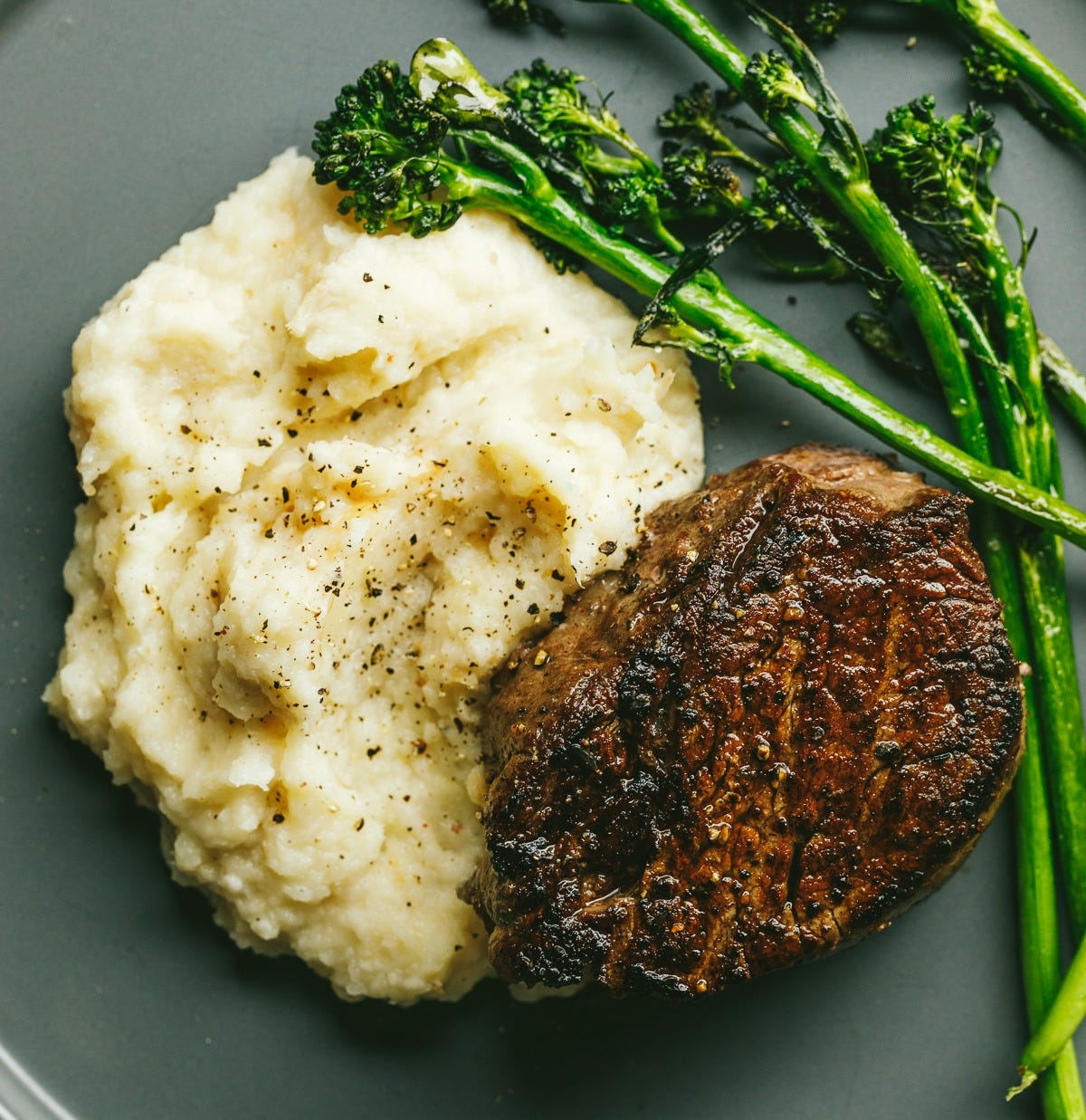
Yield: 2-4 servings
Prep time: 1 hour
Ingredients
2, 8-ounce filet mignon
¾ teaspoon fine sea salt
¾ teaspoon black pepper
1 tablespoon beef tallow or avocado oil
2 tablespoons butter
2 whole garlic cloves
2-3 sprigs of fresh thyme or rosemary
Turnip mash
2 pounds white turnips, cut into approx. 1-inch pieces
1 pound parsnips, cut into approx. 1-inch pieces
2 tablespoons butter (optional)
1 teaspoon minced garlic
½ teaspoon fine sea salt, plus more to taste
Fresh-ground black pepper, add to taste
The Method
For the filet mignon:
If you plan ahead and have time, let the steaks sit uncovered in the fridge overnight to dry out their exterior. This removes excess moisture and will help the steaks sear better. Otherwise, pat dry the steaks with paper towels. Let them sit at room temp for 30 minutes.
Preheat the oven to 250°F. Season the steaks on both sides with the salt and pepper.
Fit a wire rack into a sheet pan and spray the rack with oil. Place the steaks on the rack and then transfer the pan to the oven. Cook until the internal temp is about 110°F-112°F (if you like them medium-rare when finished). This can take about 25-35 minutes depending on the thickness of your steak and how cold it is to start with. (Check it with a meat thermometer after 25 minutes).
During the last 5 minutes of oven cooking, preheat a heavy-bottomed skillet over high heat, or until it’s smoking-hot. Add the beef tallow/avocado oil to the pan. Get your butter, garlic cloves, and thyme ready to go.
Once the steaks reach the target temp, pull them from the oven and place them in the pan. Sear, undisturbed (don’t move them!) for about 45-60 seconds per side. Reduce the temperature to medium and add the butter, garlic, and thyme to the pan (be prepared for some extra sizzling). Tilt the skillet and use a spoon to baste the steaks continuously with that melted butter for about 10-20 seconds.
Remove the steaks. Serve immediately– there’s no need to let reverse-seared steaks rest before cutting into them.
For the white turnip mash:
(Prepare while the steaks are in the oven.)
Bring a large pot of water to a boil.
Add the cubed turnips and parsnips. Boil over medium heat for about 15 minutes or until they are fork-tender.
Drain the water and return the veggies to the pot. Add the butter, garlic, salt and pepper. Use an immersion blender to mash the mixture.
Add more salt and pepper to taste. Keep warm until time to serve.
Recipe Notes
Beef tallow, ghee and avocado oil have a higher smoke point and will help your steaks form a lovely outer crust during the high-temp sear.
If preferred, you can cook the steaks on a pellet grill set to 250°F and finish them off in a skillet.
When searing the steaks, set them in the skillet and do not move them for at least 30 seconds. This direct contact will create a thick outer crust and perfectly-brown the outside.
A meat thermometer is crucial for getting perfectly-cooked steaks!
The sear will add about 10-15°F to your final temperature, so consider that when you pull the steaks from the oven.
Target temps (here’s when to remove the steaks from the oven based on how done you want them at the end)
102–105°F → final rare
110–112°F → final medium-rare
115–118°F → final medium
We love filet mignon served with a compound butter– a simple herb or garlic butter.
If you do not have an immersion blender, you can pulse the cooked turnips/parsnips in a food processor or high-powered blender. Pulse and do not let it run too long, otherwise you’ll end up with a baby food consistency.
Substitutions
Dairy-free option: Omit the butter at the very end– simply sear the steaks and serve!
Parsnips and turnips: You can use all white turnips (a lower carb option) or all parsnips or a mix of the two, as long as you end up with three pounds total. You can also substitute cauliflower for the parsnips to keep this extra low-carb.


Last year, I shared this chocolate custard with tangy honey cream. While that’s still one of my favorite chocolate desserts, this year, I wanted to create something a little more fun, kid-friendly, and easier to serve.
With just under 3 net carbs per cupcake, these chocolate cupcakes are a decadent, sweet treat that is blood sugar friendly!
The cupcakes are moist, rich and chocolatey, and the strawberry buttercream has just the right amount of fruity sweetness.
If preferred, you can swap in freeze-dried raspberries for a bold raspberry flavor. If you’re making them for Valentine’s Day, they’re cute with a heart-shaped strawberry on top.


Yield: ~15 cupcakes
Prep time: 45 minutes (plus cupcake cooling time)
Ingredients
Low-carb Chocolate Cupcakes
